What Is Fado Music? Meaning, History, and Museum Guide
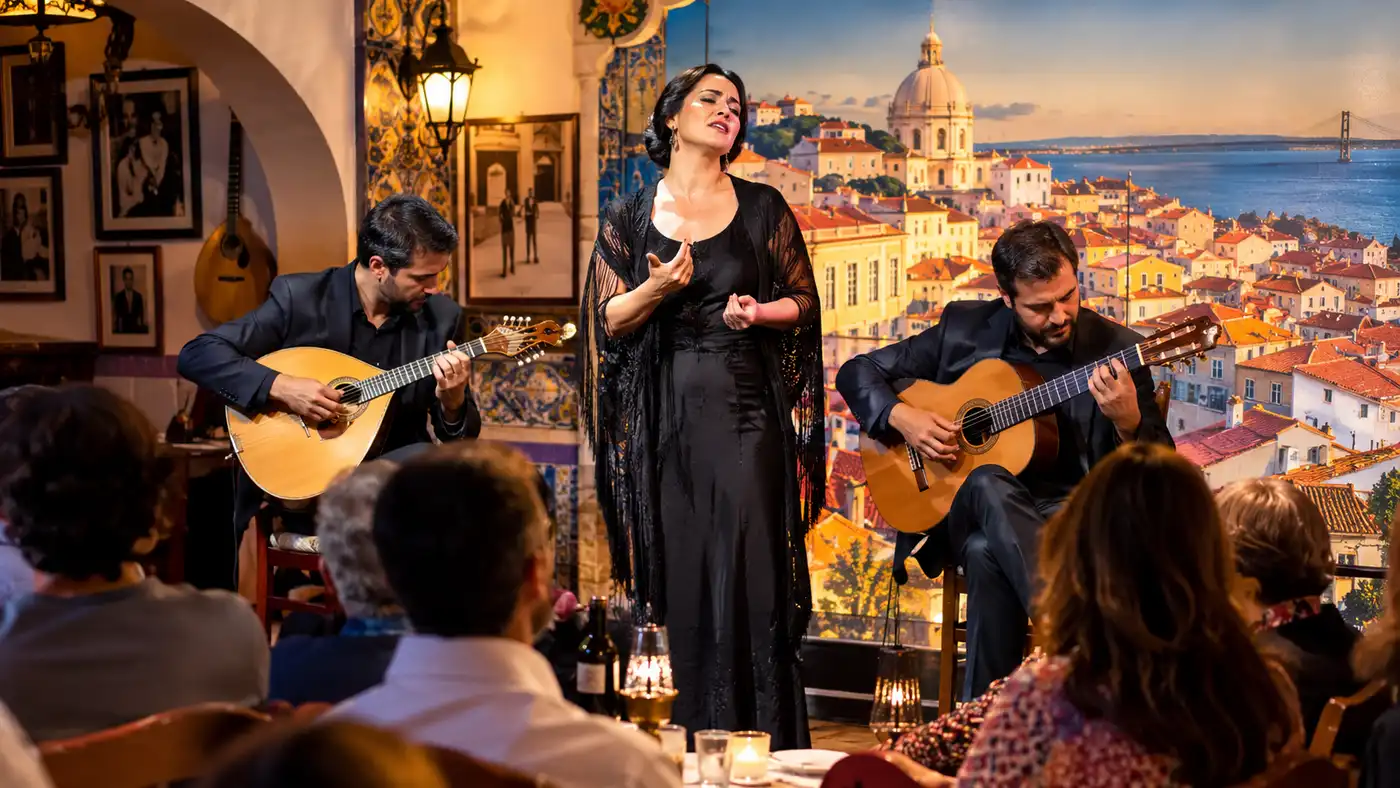
Walk through the steep alleys of Alfama around nine at night and you will hear it spilling through heavy tavern curtains. A wooden twelve-string guitar arpeggios out into the damp street, followed by a human voice so raw it stops you mid-stride. If you have ever wondered what is fado music and why it seems to stop daily life dead in its tracks across Lisbon, you are not alone. It is an urban folk tradition born in backstreet brothels and dockside taverns, transformed across two centuries into Portugal's proudest cultural export.
Most travelers come looking for a simple definition, yet defining this music requires untangling maritime grief, working-class resilience, and a peculiar Portuguese concept called saudade. In this guide, we dig straight into the authentic origins of this sound, explain what actually happens when you sit down inside a candlelit fado house, compare regional styles, and show you how to navigate the Lisbon Fado Museum on your own terms.
Book your fado show lisbon experience:
The Meaning of Fado: Fate, Longing, and Saudade
The literal meaning of fado traces back to the Latin word fatum, meaning destiny or fate. When someone asks what is fado in Portugal, the simplest answer is that it is the music of submission to circumstances beyond human control. It speaks for the sailor whose caravel never made it back from Mozambique, the widow scrubbing church stone stairs, or the lover abandoned in an alleyway. It does not try to cheer you up. Instead, it invites you to sit squarely inside heavy emotions without apologizing for them.
At the beating heart of Portugal fado lies saudade. English simply has no word for this. It is a sharp, bittersweet longing for someone or something gone forever, paired with the quiet acknowledgment that what you miss might never return. You feel it when you look at an old black-and-white photograph of someone who died thirty years ago. In Portuguese culture, carrying that ache is not considered pathological. It is embraced as proof that you have truly lived and loved.
When you ask what is a fado lyric actually talking about, you find everyday street scenes. Lyricists rarely write about grand political conquests or high-society balls. Instead, classic verses dwell on the sound of church bells in Mouraria, the smell of roasted sardines, rain beating against clay roof tiles, or jealousy between neighbors. The themes remain deliberately domestic and intensely local.
Singers lean forward, close their eyes, and let the voice break against the notes. It is common to see elderly men and women in the front row weeping into small paper napkins while listening. Nobody stares or feels embarrassed. The catharsis is the entire point of the gathering.
From Sailors to Salons: A Brief History of What Is Fado Music
Nobody knows the exact day or year fado was born. It coalesced sometime during the early 1820s in Lisbon's most desperate port neighborhoods: Alfama, Mouraria, and Bairro Alto. Brazilian sailor songs known as lundu, African slave dances called fofa, and medieval troubadour ballads mixed together in dingy harbor joints. Prostitutes, sailors, and day laborers sang it long before polite society would even let the instruments cross their doorsteps.
The genre found its first true legend in Maria Severa Onofriana, an enigmatic prostitute and tavern singer from Mouraria. She played the Spanish guitar and sang with such desolate ferocity that a wealthy bullfighter, the Count of Vimioso, fell recklessly in love with her. That doomed romance bridged the gap between slum dwellers and Lisbon aristocrats. Maria died of tuberculosis at only twenty-six in 1846, but her legacy established the black shawl as the universal uniform for female performers.
Decades passed, and fado em Portugal gradually migrated into theaters, radio stations, and bourgeois parlors. If you want to understand the modern sound, you must study the mid-twentieth century and the rise of famous fado singers led by the incomparable Amalia Rodrigues. Known simply as the Rainha do Fado (Queen of Fado), Amalia stripped away the rough edges, introduced orchestral arrangements, and set complex poetry by Portugal's greatest literary figures to traditional chord progressions. She traveled the globe, performing from Tokyo to New York, securing international respect for what had once been regarded as criminal street noise.
Note: During the four-decade Salazar dictatorship (the Estado Novo), lyrics were heavily censored. The regime forced artists to avoid political commentary and promote traditional, submissive family values instead, a political baggage the genre spent decades shaking off after the 1974 Carnation Revolution.
By the 1990s, younger musicians began stripping away old political associations. New voices emerged, experimenting with cellos, pianos, and modern poetry while keeping the core acoustic soul intact. UNESCO took note of this revival, officially declaring Lisbon's native sound an Intangible Cultural Heritage of Humanity in November 2011.
Lisbon vs Coimbra: Styles of Portugal Fado Compared
Foreign visitors often talk about fado as if it were a single monolithic style, yet Portugal actually harbors two fierce, distinct branches: Lisbon and Coimbra. If you accidentally confuse the two in front of a purist, prepare for a passionate twenty-minute lecture over your espresso.
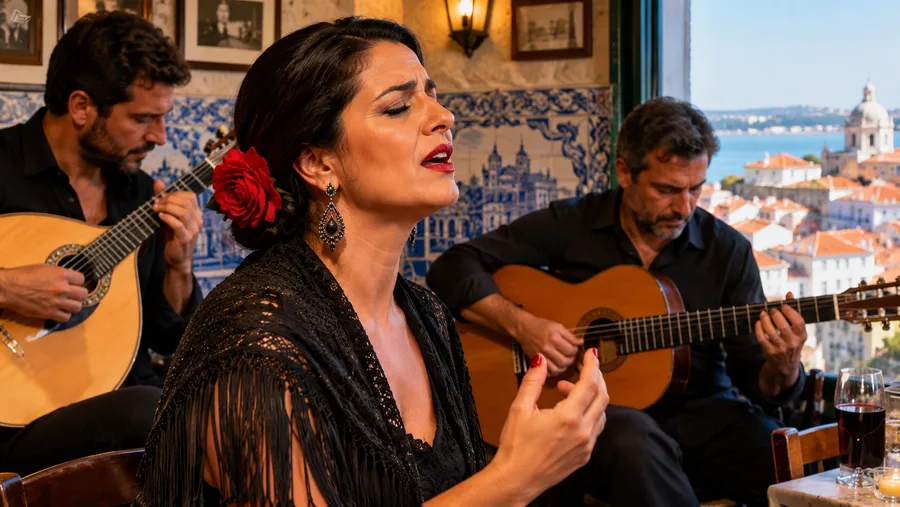
Lisbon fado is urban, working-class, and open to anyone who has lived enough life to hold a tune. It is sung by both men and women, traditionally draped in dark wool shawls. The voice is rough around the edges, theatrical, and steeped in personal tragedy. If you explore fado in Alfama, you are hearing this raw Lisbon lineage, born in dockside shadows.
Coimbra fado belongs to a totally different world. Developed exclusively within the medieval courtyards of the University of Coimbra, Portugal's oldest academic institution, this music is sung exclusively by men who are current students or alumni. They dress in traditional black academic robes and sing high, soaring serenades beneath dormitory balconies or inside Gothic stone cloisters. The songs treat student camaraderie, youthful nostalgia, and romantic chivalry rather than neighborhood poverty.
| Feature | Lisbon Fado | Coimbra Fado |
|---|---|---|
| Primary Origins | Sailor taverns, docks, and red-light alleys | University students, poets, and academic cloisters |
| Who Sings | Men and women of all ages and backgrounds | Exclusively university-educated men |
| Performers' Attire | Black dress with a dark fringed shawl for women | Black academic capes and university cassocks |
| Common Themes | Saudade, everyday poverty, fate, domestic grief | Academic youth, romantic serenades, literary poems |
| Portuguese Guitar Tuning | Lisbon tuning (D-A-B-E-A-B), teardrop scroll | Coimbra tuning (C-G-A-D-G-A), teardrop shield |
| Audience Applause | Standard clapping at the end of each piece | Clearing the throat (a quiet cough) or gentle murmurs |
The instruments differ slightly as well. While both styles rely on a standard nylon-string acoustic guitar (the viola de fado) for rhythm and bass lines, the lead instrument is the guitarra portuguesa. This pear-shaped, twelve-string lute produces that crystalline, bell-like timbre that pierces straight through room noise. The Lisbon version has an oval scroll on its headstock, whereas the Coimbra model ends in a tear-shaped wooden shield and is tuned one whole step lower, creating a moodier resonance.
Book your fado show lisbon experience:
What Is a Fado Show in Lisbon Like? Etiquette and Rituals
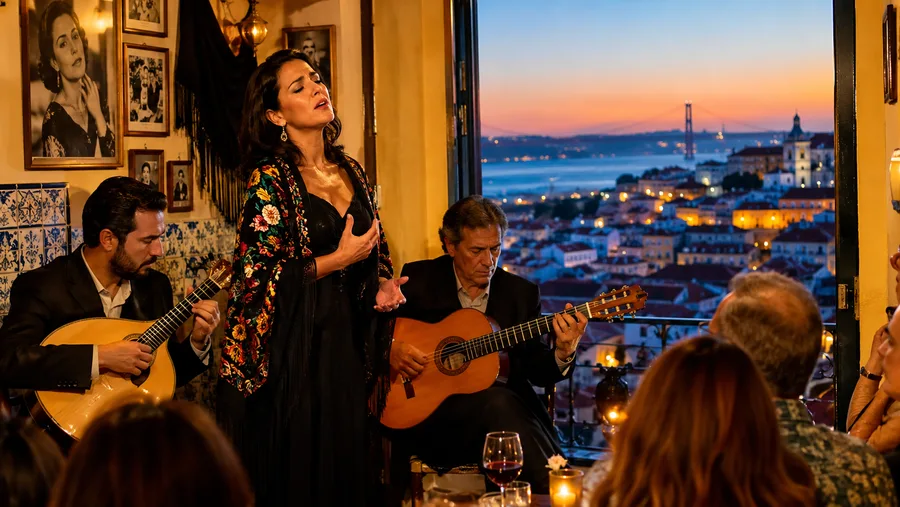
If you are planning an evening out, you might wonder what is a fado show in Lisbon really like in practical terms. First, throw out any mental picture of a Broadway stage or a breezy lounge act. When people speak of what is a fado show lisbon style, they mean an intimate, candlelit dinner or a small concert room where daylight is banished and silence is fiercely enforced.
You sit down around 8:00 or 8:30 in the evening. Bread, olives, cheese, and carafes of regional wine arrive at the table. Around 9:15, the lights dim down to nearly nothing. The waiters freeze where they stand. Then someone in the room issues the classic warning: "Silêncio, que se vai cantar o fado!" (Silence, fado is about to be sung). The guitars strike their opening chords in absolute darkness, and the singer walks into the middle of the tables without a microphone.
Pro tip: Arrive hungry but make sure you eat your main course during the breaks between sets. Chewing steak or scraping your fork against the ceramic plate while someone is singing will earn you scorching glares from the staff and locals.
Performances work in cycles. A typical night breaks down into three or four separate sets, each consisting of about three songs. Between these sets, the lights come back up, waiters rush out hot codfish dishes, wine glasses are refilled, and conversation resumes at normal volume for twenty minutes.
- Absolute quiet during sets: Put your mobile phone on silent and do not whisper to your neighbor; talking during a performance is considered deeply offensive.
- No flash photography: Taking photos with the flash on ruins the performers' concentration and shatters the room's dim, intimate ambiance.
- Keep your hands still until the song concludes: Never clap in the middle of a piece or tap along to the beat, because fado's rhythmic timing is intentionally fluid and elastic.
- Respect the house minimums: Many historic venues charge a basic cover fee between €15 and €30 per person, while sit-down dinner houses often expect a total bill of around €55 to €75 per guest.
There are also informal sessions called fado vadio (vagrant fado). In these tiny, scruffy taverns, amateur singers from the neighborhood stand up straight from their tables between swallows of red wine to deliver a song. Some are off-key, some are extraordinary, but the sincerity is unvarnished. You might hear an eighty-year-old grandmother singing about her youth followed immediately by a twenty-year-old apprentice carpenter.
Visiting the Lisbon Fado Museum (Museu do Fado)
To really grasp the roots of the music before spending your evenings in dark taverns, set aside ninety minutes for the Lisbon Fado Museum. Known locally as the Museu do Fado, it sits conveniently at Largo do Chafariz de Dentro, right at the foot of the Alfama district where the early songs were born. The building itself is unmistakable, painted a warm terracotta pink, originally built in the nineteenth century as a public water pumping station.
The permanent collection tells the story chronologically using antique acoustic instruments, original sheet music, newspaper clippings from the 1800s, and vintage recording equipment. One of the highlights is Jose Malhoa's famous 1910 oil painting O Fado, which depicts a tattooed ruffian strumming a guitar on a rumpled bed while a loose-haired woman gazes at him through cigarette smoke. It captures the underworld flavor of the early days better than any text book ever could.
- Interactive listening stations: The audio guide is included with your ticket, letting you tap hundreds of rare historical recordings right beside the singer's portrait.
- Luthier workshop displays: You can see exact cross-sections of how Portuguese guitars are crafted by hand from aged walnut, spruce, and ebony.
- Temporary exhibition halls: The upper floor hosts rotating retrospectives dedicated to legendary songwriters, poets, and iconic fado houses that have shuttered.
- Specialized music shop: The ground-floor bookstore sells hard-to-find vinyl records, academic sheet music, and biographies that you will not spot in typical souvenir stands.
The museum is open Tuesday through Sunday from 10:00 AM to 6:00 PM, with last admission allowed at 5:30 PM. It remains closed on Mondays. General adult admission costs around €5, while seniors and students pay about €2.50. If you hold a Lisboa Card, entry is completely free. The museum also coordinates occasional acoustic shows inside its auditorium, which provide an educational introduction without the pressure of ordering an expensive multi-course dinner.
Frequently Asked Questions about what is fado music
What is the typical dress code for attending a fado show?
Most venues have no formal dress code, so smart casual clothing is perfectly fine. Jeans and comfortable walking shoes work well for traditional taverns in Alfama. If you book an upscale, historic fado house in Bairro Alto or Lapa, wearing a collared shirt or a neat dress fits the evening atmosphere better.
Do I need to understand Portuguese to appreciate what is a fado show?
Not at all. The emotional weight carries across through the singer's vocal delivery and the plaintive ringing of the Portuguese twelve-string guitar. Many regular listeners argue that not understanding the specific words lets you focus purely on the raw texture of the performance.
What is the difference between fado vadio and professional fado?
Professional fado takes place in formal venues called casas de fado, where seasoned musicians perform scheduled sets for paying dinner guests. Fado vadio is raw and amateur, held in neighborhood taverns where local patrons, cooks, or taxi drivers take turns stepping forward to sing whenever the mood strikes them.
Quick Reference
- Origins: 1820s dockside Lisbon taverns
- Key instruments: 12-string Portuguese guitar and classical acoustic guitar
- Core concept: Saudade (deep emotional longing and melancholy)
- Two styles: Lisbon (urban, working-class) and Coimbra (academic, male-only)
- Museum location: Alfama base, entry roughly €5, open Tue-Sun
Book your fado show lisbon experience:
My Take on Experiencing Fado
I honestly think too many visitors make the mistake of treating fado like background entertainment, something to play softly while they snap dinner photos for Instagram. It does not work that way. When the lights fall low in a cramped Alfama dining room and the twelve-string guitar begins its weeping cadence, you have to put your cutlery down, silence your inner chatter, and simply let the sadness wash over you. Portugal built an entire identity around facing loss with dignity and song. Sit back, take a sip of dark Douro red wine, and let the voice carry you into the Lisbon night.
Read more about fado show lisbon.